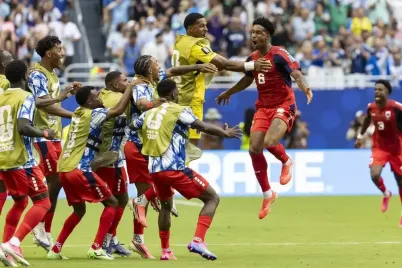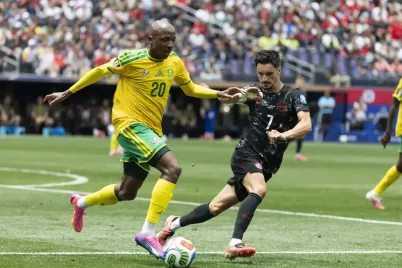


Canada’s long-awaited moment on football’s biggest stage has finally arrived as the co-hosts prepare to begin their FIFA World Cup 2026 campaign against Bosnia and Herzegovina at Toronto Stadium on Friday, June 12. Kick-off is scheduled for 3pm local time (8pm UK time), with a capacity crowd expected to create one of the most memorable atmospheres in Canadian football history.
The opening fixture of Group B carries enormous significance for both nations. For Canada, it represents an opportunity to claim a first-ever World Cup victory and take a major step towards reaching the knockout rounds for the first time. Bosnia and Herzegovina, meanwhile, return to the tournament for only the second time in their history and arrive determined to prove they belong among the world’s elite after a remarkable qualification campaign.
There is no escaping the scale of the occasion. While Canada has appeared at previous World Cups in 1986 and 2022, the nation remains without a victory at the tournament, having lost all six matches across those two appearances. Hosting the competition alongside the United States and Mexico has generated unprecedented interest in the sport across the country, and many see this tournament as a defining moment for the future of football in Canada. The expectation surrounding the national team is immense, but so too is the belief that this generation is capable of delivering something special.
Under the leadership of head coach Jesse Marsch, Canada has undergone a significant transformation. Since taking charge in 2024, the American has instilled an aggressive, energetic style of play built around intensity, pressing and attacking ambition. His impact was felt almost immediately when Canada reached the semi-finals of the Copa América, a run that provided valuable experience against some of the strongest teams in international football and demonstrated that the squad could compete on the biggest stages.
Marsch has embraced the pressure that comes with leading a host nation into a World Cup. Throughout the build-up, he has spoken confidently about the responsibility facing his players and has made it clear that expectations should be welcomed rather than feared. The challenge now is turning that confidence into results.
The biggest concern for Canada heading into the opener centres around the fitness of captain Alphonso Davies. The Bayern Munich star remains the face of Canadian football and one of the most recognisable players in the tournament. However, a hamstring injury suffered during club action has ruled him out of the opening match. While there remains optimism that he could feature later in the group stage, his absence is a significant blow for a team that relies heavily on his pace, creativity and leadership.
Davies has already secured his place in Canadian football history. His goal at the 2022 World Cup was the nation’s first-ever goal at the tournament, and his emergence as one of the world’s premier full-backs has helped elevate the profile of the national team. Supporters will undoubtedly be disappointed not to see him on the pitch in Toronto, but the hope remains that he can play an important role as the competition progresses.
With Davies unavailable, much of the attacking responsibility falls on Jonathan David. Canada’s all-time leading goalscorer enters the tournament as the country’s most important attacking player and one of the most dangerous forwards in Group B. The striker has built a reputation for clinical finishing and intelligent movement, qualities that could prove decisive against a disciplined Bosnian defence.
David’s importance to the Canadian cause cannot be overstated. For years, the national team lacked a consistent goalscoring threat at the highest level. That is no longer the case. His performances in Europe have established him as one of the leading forwards produced by the country, and many supporters will look to him to deliver the moments capable of defining a tournament.
Despite the injury setback involving Davies, there are signs that Canada’s fitness concerns are beginning to ease. Midfielder Ismaël Koné has recovered after a brief health scare during training, while defender Moïse Bombito continues to make progress following a lengthy recovery from injury. Although Bombito may not yet be operating at full capacity, his presence offers additional defensive depth at a crucial stage of the competition.
Standing across from the hosts is a Bosnia and Herzegovina side carrying its own compelling narrative. The Balkan nation is appearing at its first World Cup since 2014 and only the second in its history. Qualification was achieved in dramatic fashion, with victories in the play-offs capturing the imagination of supporters and reinforcing the team’s reputation for resilience and determination.
Few expected Bosnia and Herzegovina to navigate such a difficult path back to the World Cup. Yet the squad repeatedly demonstrated character under pressure, refusing to be intimidated by more fancied opponents. That underdog mentality has become one of the defining characteristics of the current team and is something head coach Sergej Barbarez has embraced throughout his tenure.
Barbarez has repeatedly highlighted the pride his players feel in representing their nation. The former international has overseen a period of steady progress and has successfully built a group that combines experience with youthful energy. Rather than relying on one or two individuals, Bosnia and Herzegovina have developed into a collective capable of frustrating opponents and capitalising on opportunities when they arise.
Even so, one name continues to dominate the conversation whenever Bosnia and Herzegovina take the field.
Edin Džeko remains the heartbeat of the national team.
At 40 years of age, the veteran striker continues to lead by example and enters the tournament as captain, talisman and national icon. His international record speaks for itself, with 73 goals making him comfortably the country’s all-time leading scorer. Long after many players of his generation have retired, Džeko continues to influence matches through intelligence, positioning and an extraordinary understanding of the game.
For supporters of Bosnia and Herzegovina, Džeko represents far more than goals. He is a symbol of the nation’s footballing journey over the last two decades. Having featured during the country’s first World Cup appearance in Brazil twelve years ago, he now returns to the global stage hoping to inspire another memorable chapter.
There is also a fascinating historical angle surrounding this fixture. Despite both nations having participated in international football for decades, Canada and Bosnia and Herzegovina have never previously met in a senior men’s international match. Friday’s contest therefore marks the first chapter in what could become an increasingly significant footballing rivalry.
The match itself presents an intriguing tactical battle. Canada is expected to dominate possession and look to impose its high-energy style from the outset. Playing in front of a passionate home crowd should provide an additional boost, particularly during the early stages when emotions will inevitably be running high.
Bosnia and Herzegovina are likely to adopt a more measured approach. Defensive organisation, patience and efficient use of possession have been key themes throughout their recent success. Rather than engaging in an open contest, they may seek to frustrate the hosts before looking to exploit opportunities through quick transitions and set pieces.
Tournament openers often carry a unique pressure. Nerves can influence performances, while the fear of making mistakes occasionally outweighs the desire to attack. That dynamic could produce a cautious opening period before the game gradually begins to open up.
What is certain is that the result could have a major impact on the shape of Group B. With Switzerland widely viewed as one of the strongest teams in the section and Qatar also harbouring ambitions of progression, securing points in the opening match is likely to be crucial.
For Canada, victory would not only end a painful World Cup record but also provide a massive psychological boost heading into the remainder of the group stage. The confidence generated by a successful start could transform the mood around the squad and increase belief that a historic knockout-stage appearance is within reach.
Bosnia and Herzegovina will view the contest differently. Arriving as underdogs removes much of the external pressure and allows them to approach the match with freedom. A positive result against the hosts would immediately alter perceptions of the group and potentially place Barbarez’s side in a strong position to challenge for qualification.
Beyond the tactical battles and tournament implications lies a broader story about two nations striving to leave a lasting mark on football’s biggest stage. One is attempting to seize a once-in-a-generation opportunity on home soil. The other is looking to build upon one of the most inspiring qualification campaigns in Europe.
As Toronto prepares to welcome the world, anticipation continues to build. The stadium will be packed, millions will be watching across the globe and the pressure will be immense. Yet these are precisely the occasions players dream about throughout their careers.
Canada’s quest for a first World Cup victory begins here. Bosnia and Herzegovina’s bid to write another remarkable chapter in its footballing history starts on the same stage. With national pride, momentum and precious Group B points at stake, all the ingredients are in place for a compelling World Cup encounter.